
- Since 2018Cleaning and maintaining commercial buildings across the North West
- Fully insuredComprehensive public liability cover on every job
- Trained teamsAccredited operatives, trained for work at height
- 24 hoursTypical turnaround on a written quote
A blocked gutter is cheap to clear and expensive to ignore. Once water backs up over the fascia it finds its way into insulation, ceiling tiles and stock, and on an industrial roof it usually reaches the purlins before anyone notices the stain.
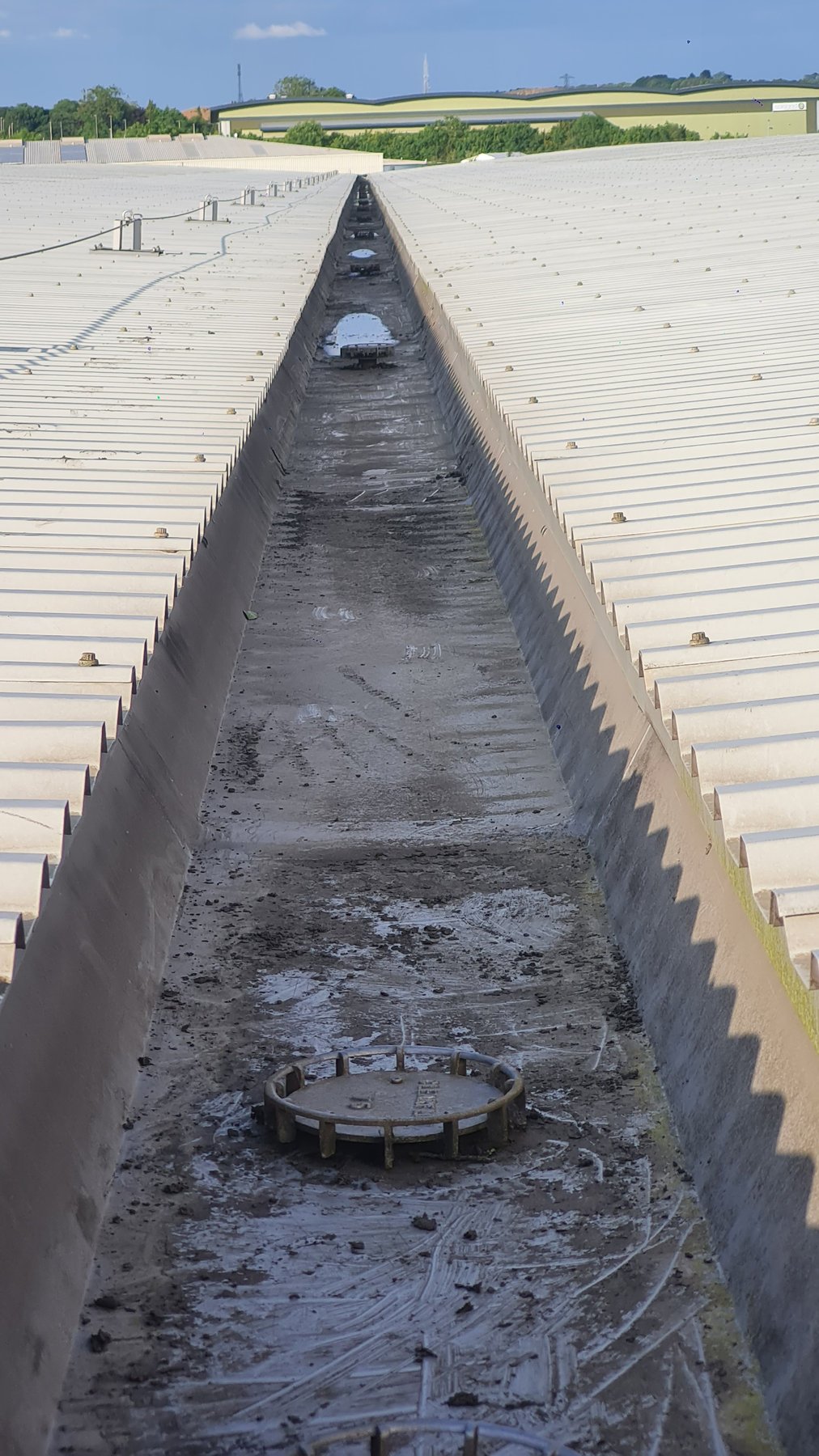
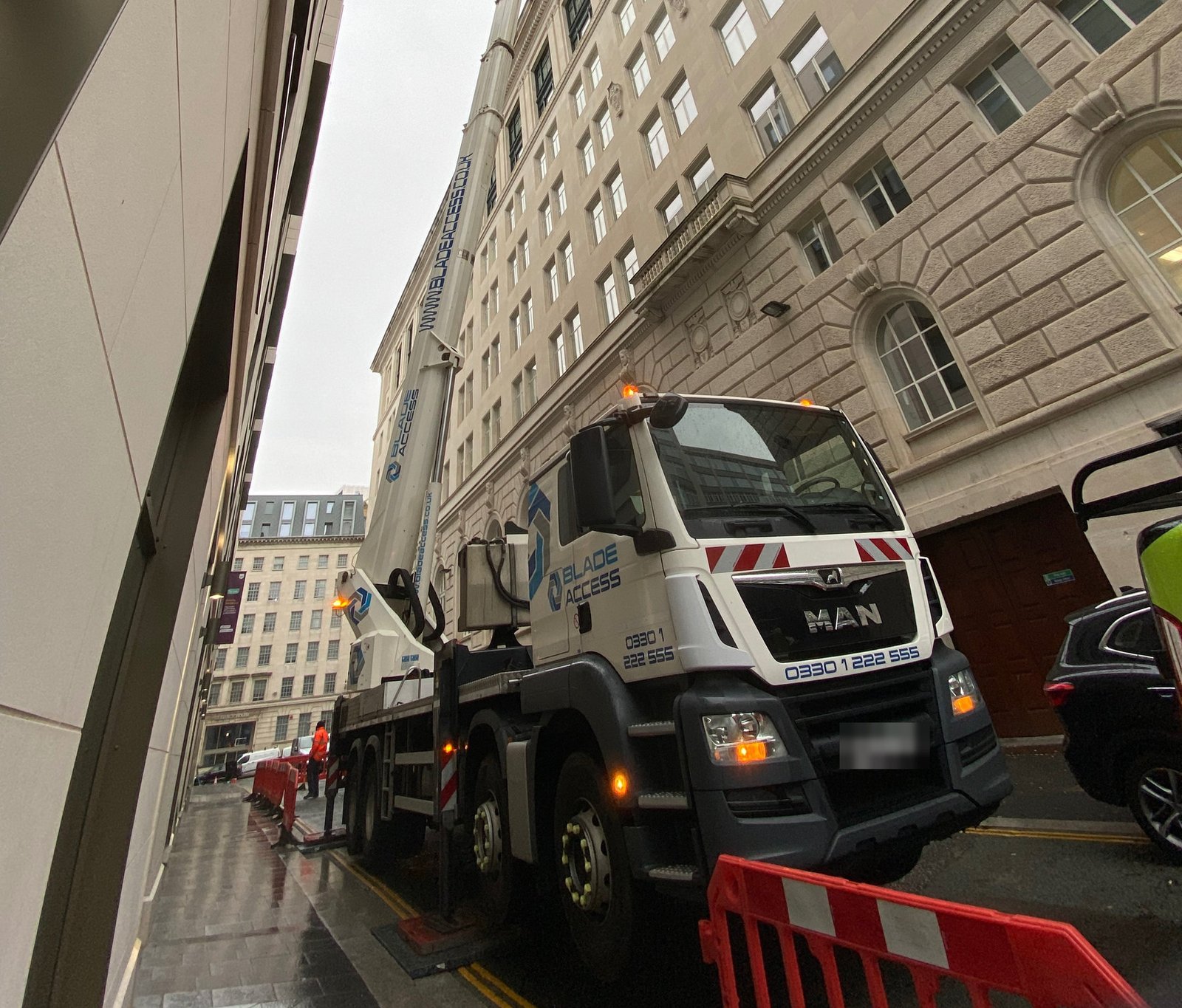
Industrial valley gutters are wide, long and full of compacted silt, so they are cleared by hand from the run itself rather than sucked out from the ground. We get up there on a cherry picker or a scissor lift, or use the machine to reach the roof and work along the gutter from there. There is no scaffolding to hire, no operative walking a fragile roof, and no need to shut down the area underneath.
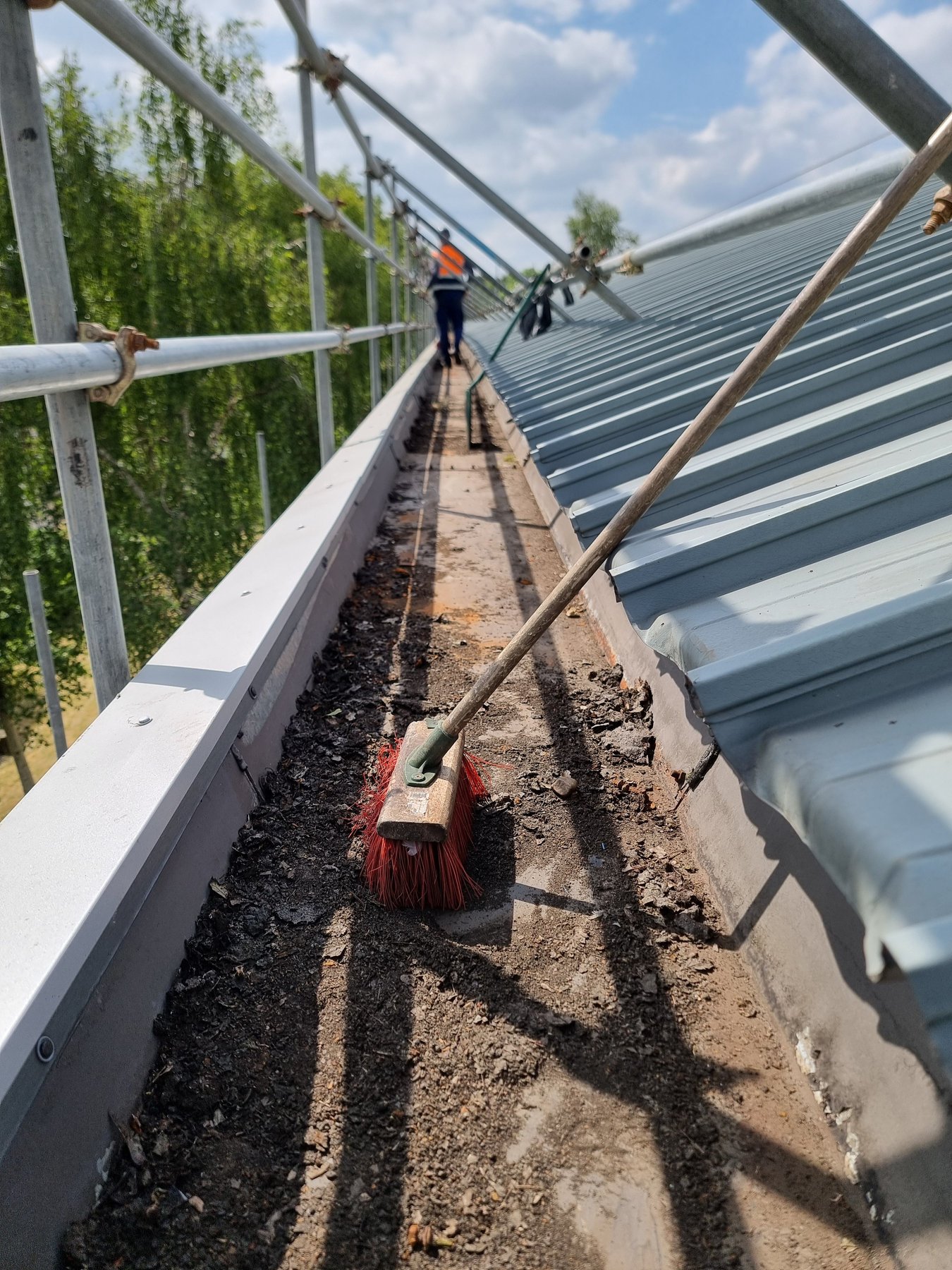
What we remove
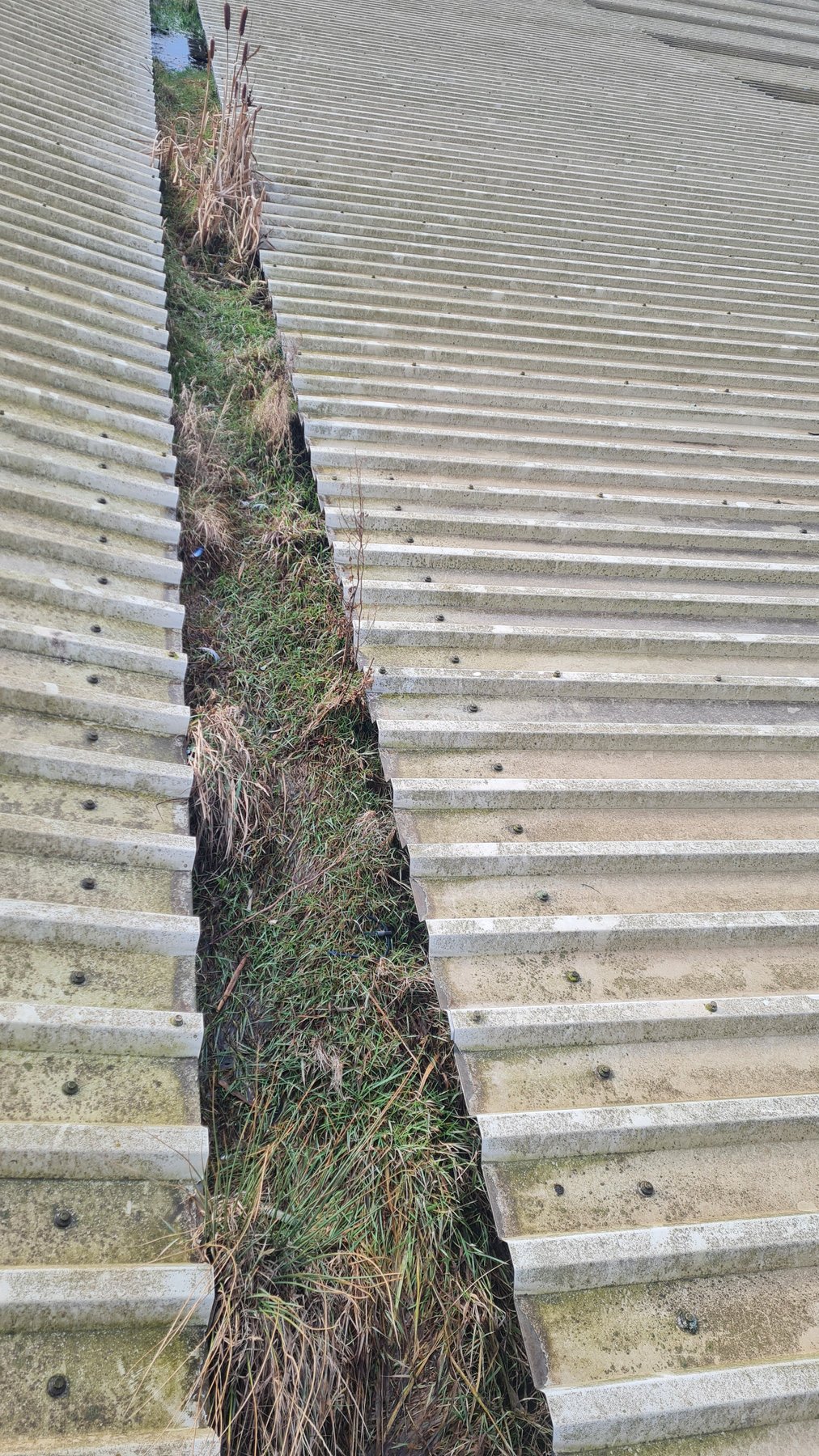
Leaf litter and silt are the obvious ones. On industrial estates we also pull out moss, bird nesting, sheet plastic, insulation offcuts left by roofers, and in one memorable case a traffic cone. Downpipes and outlets are rodded and flow tested before we leave.
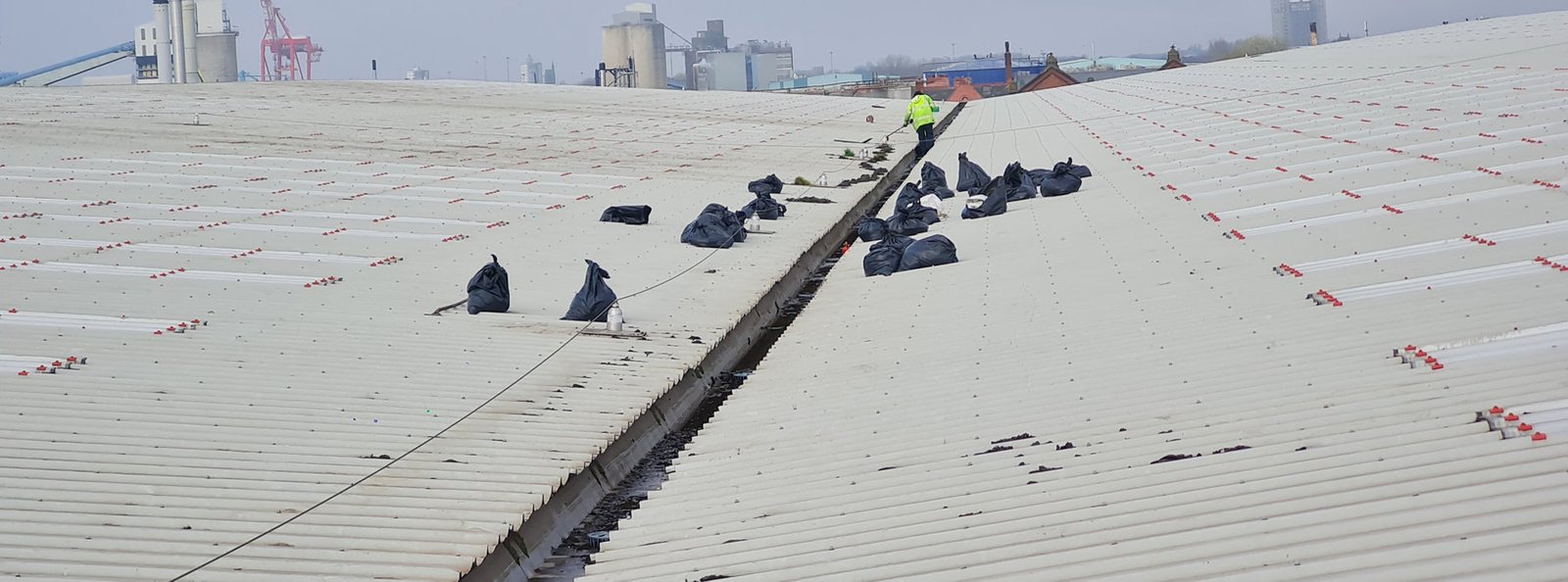
Valley gutters on large distribution sheds hold a surprising volume of debris. We clear the full run rather than just the visible sections at each end.
How often, and why it is cheaper on a schedule
Twice a year suits most industrial sites: once after leaf fall and once in spring. Units under trees, on estates with a lot of airborne dust, or handling cardboard need looking at more often, because that debris builds far faster than people expect.
Clients who put it on a schedule pay less per visit than those who ring when water is already coming in. A scheduled clearance is a couple of hours; a reactive one usually means the gutter has been holding water long enough to need repairs as well. It also means somebody is on your roof twice a year who can tell you when a joint has started to go, before it becomes a leak.
Photographed before and after
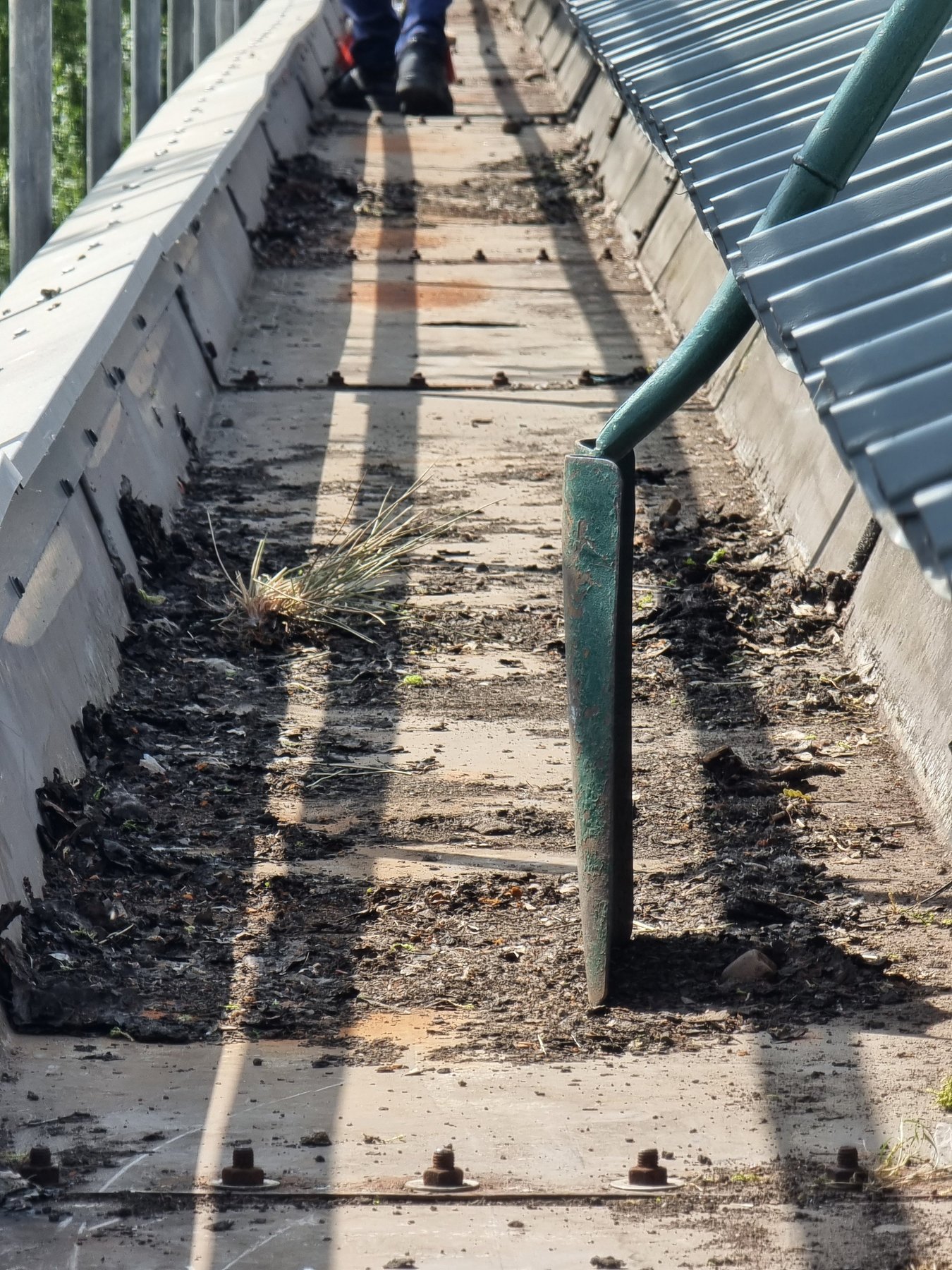
We photograph every run before we touch it and again once it is clear, and you get the lot. Most people never see their own gutters, so the before shots are usually the first time anyone has looked. They are worth keeping for your maintenance file, for a landlord discussing dilapidations, or for an insurer asking whether the roof was being looked after.
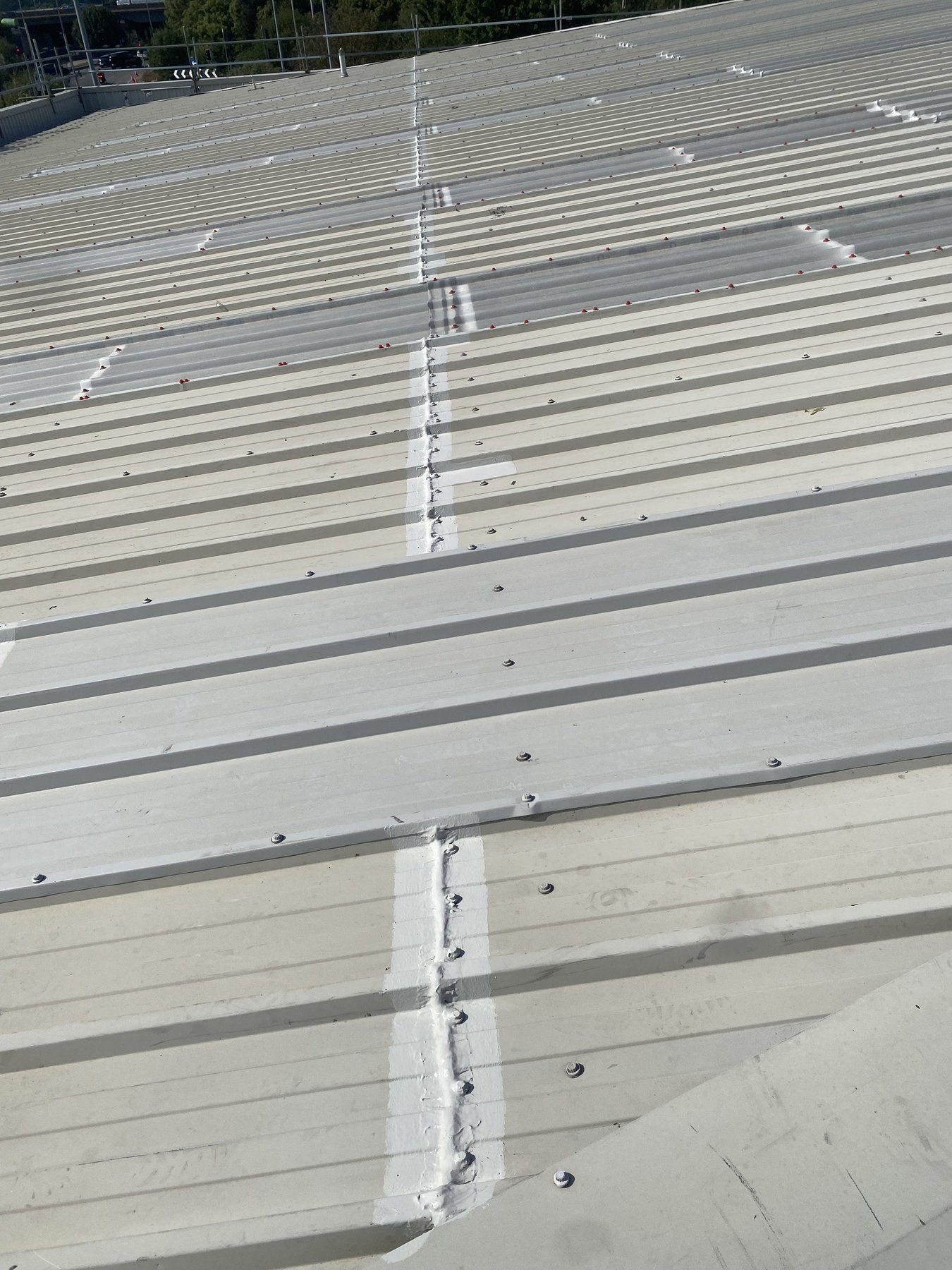
If we find split joints, failed sealant, rusted-through sections or standing water from a sagging run, we tell you and price the repair separately. We do not clear a gutter, say nothing and let you find out in November.
How the job runs
-
Powered access
Cherry picker or scissor lift, arranged and priced in. No scaffolding to hire and no waiting for it to go up.
-
Downpipes flow tested
Clearing a gutter and leaving a blocked outlet achieves nothing. Every downpipe is rodded and tested.
-
Debris taken away
Waste is bagged and removed. Your bins and yard stay as we found them.
-
Repairs priced separately
Sealant, joint repairs, brackets and outlet replacement quoted on their own, never bundled in as a surprise.
Signs your guttering needs clearing now
- Water sheeting over the front edge in heavy rain rather than running to the downpipe
- Staining or green algae on the wall or cladding directly below the gutter line
- Plant growth visible from the ground, which means there is enough silt to hold roots
- Damp patches at the top of internal walls, or drips through ceiling tiles near the perimeter
- Standing water and rust streaks along a valley gutter on a steel framed unit
Ready for a price?
Send a few photos and a postcode and we will come back with a fixed written quote, usually within one working day.
Frequently asked questions
Twice a year for most sites: once in late autumn after leaf fall and once in spring. Buildings with overhanging trees, or units on a site with a lot of airborne dust, are better on a quarterly schedule. Large distribution sheds with valley gutters usually need at least an annual clearance.
No. We use powered access, normally a cherry picker or a scissor lift, which goes up and comes down the same day. That avoids the cost and the lead time of scaffolding, and means the area below is only closed off while we are actually working above it.
The photographs usually show it: a sagging run holding water, a missing leaf guard, a downpipe crushed by a delivery vehicle, or a broken joint catching debris. We report what we see and quote the fix.
Yes, in almost all cases. We only need the area directly below the gutter kept clear, and that moves along with us as we work down the elevation.
More from this kind of job
Where we work
We are based in Manchester and cover the whole of the North West from here. For roof work and multi-site contracts we travel nationally, and have worked on sites from Bristol to Leicester. If your site is not on the list, ask anyway.
- Manchester
- Liverpool
- Chester
- Warrington
- Preston
- Blackpool
- Lancaster
- Bolton
- Stockport
- Wigan
- Rochdale
- Salford
- Leeds
- Sheffield
Other services you might need
Request a quote
Send us the details and we'll come back with a fixed price. No pressure, no sales calls.