
- Since 2018Cleaning and maintaining commercial buildings across the North West
- Fully insuredComprehensive public liability cover on every job
- Trained teamsAccredited operatives, trained for work at height
- 24 hoursTypical turnaround on a written quote
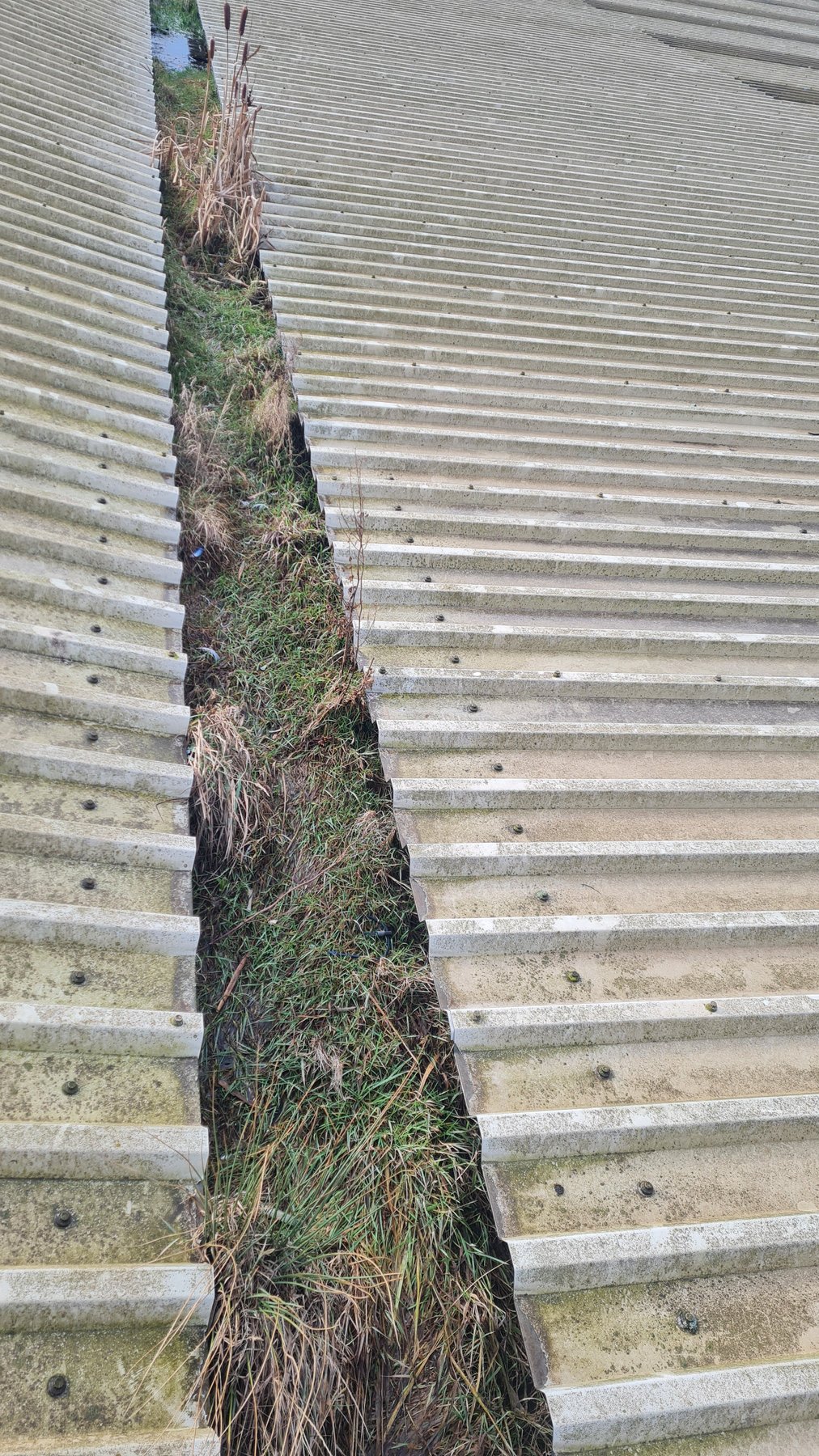
When water starts coming through the ceiling below a valley gutter, the gutter itself is usually sound. What has failed is a joint, an outlet, or the lining. The sections were bolted and sealed when the building went up, the sealant hardens and shrinks over twenty or thirty years, and eventually water finds the gap.
That is worth knowing before anyone quotes you for a new gutter. Replacement means stripping roof sheets either side, working around the purlins and opening the building up to weather. Repairing it in place does not: the run is cleaned out, dried, the joints ground back and sealed, and the whole length coated with a cold applied liquid system.
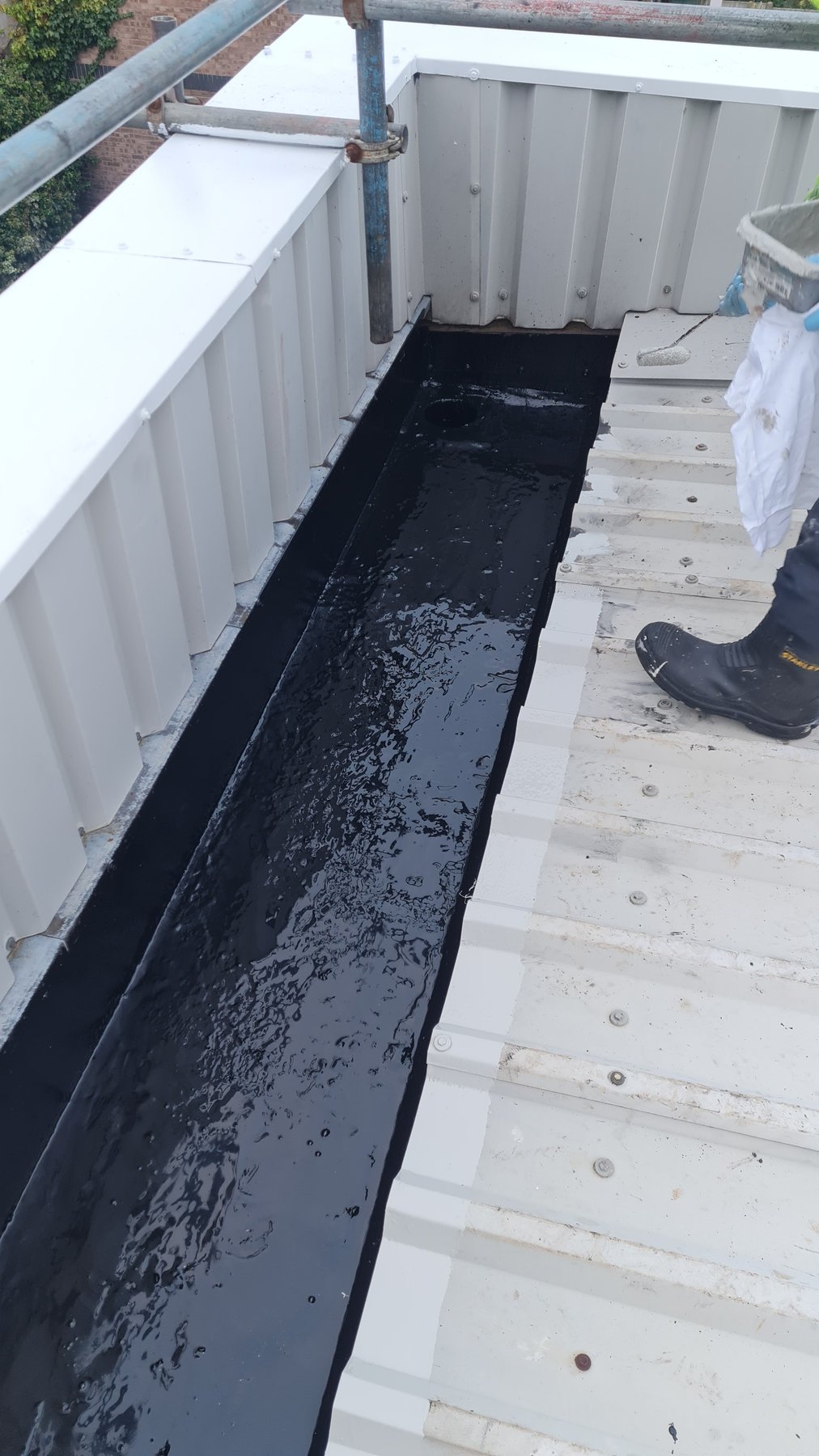
What the work involves
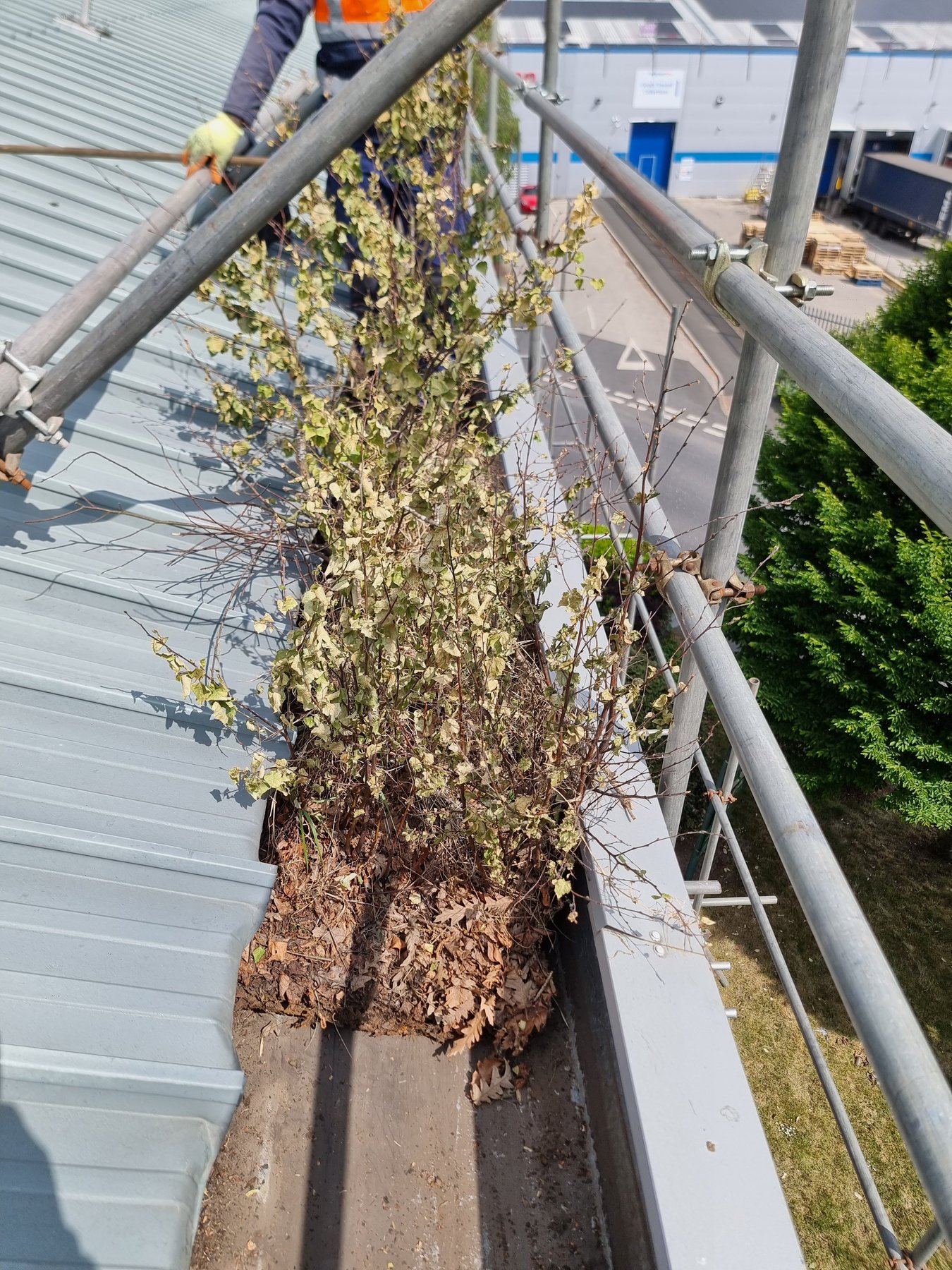
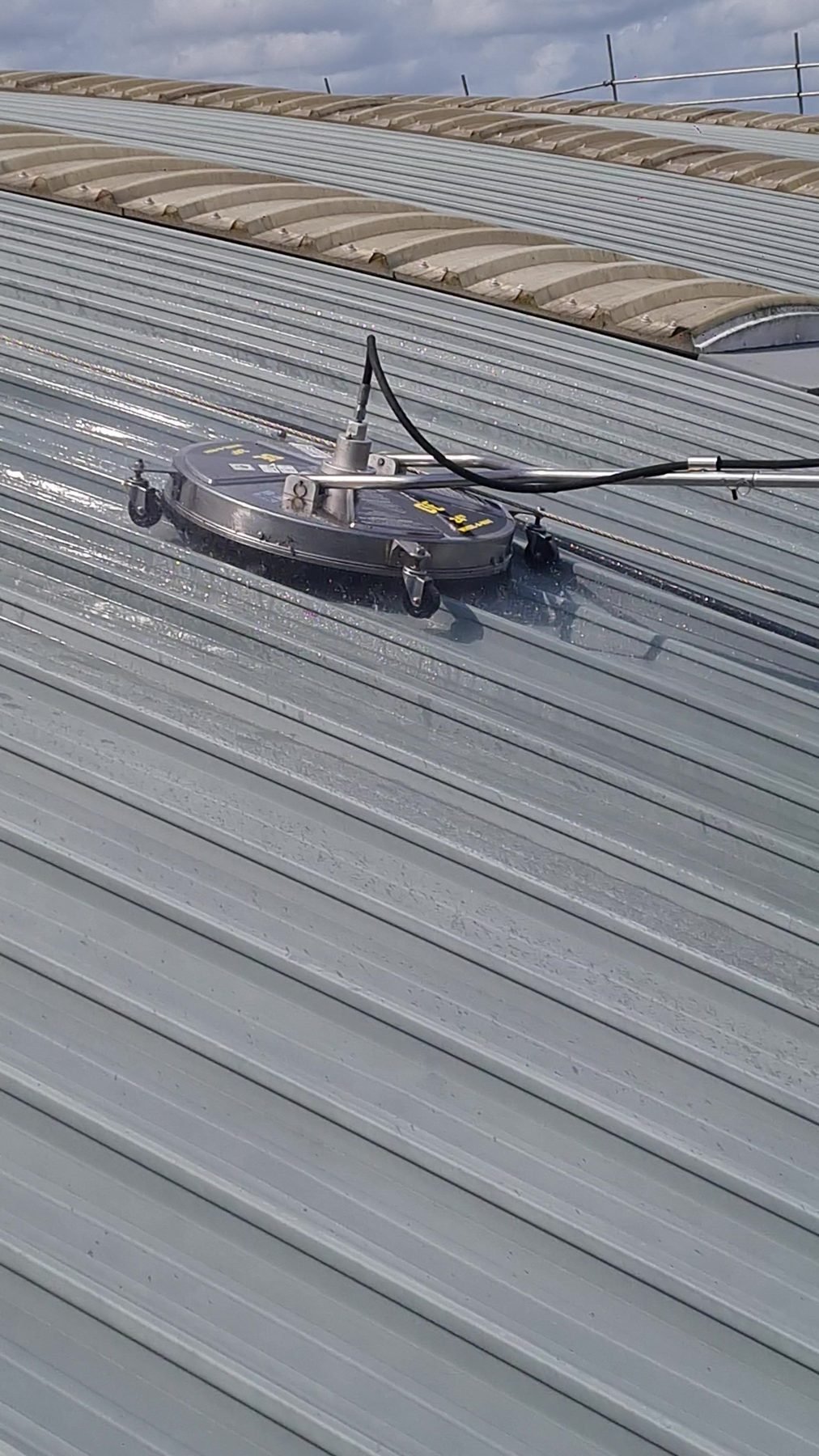
The gutter is cleared and washed out first, then left until it is completely dry. Nothing sticks to a damp gutter, so this is the step that decides whether the job lasts. Loose material, failed sealant and rust scale come off, and the joints are ground back to give the primer something to key to.
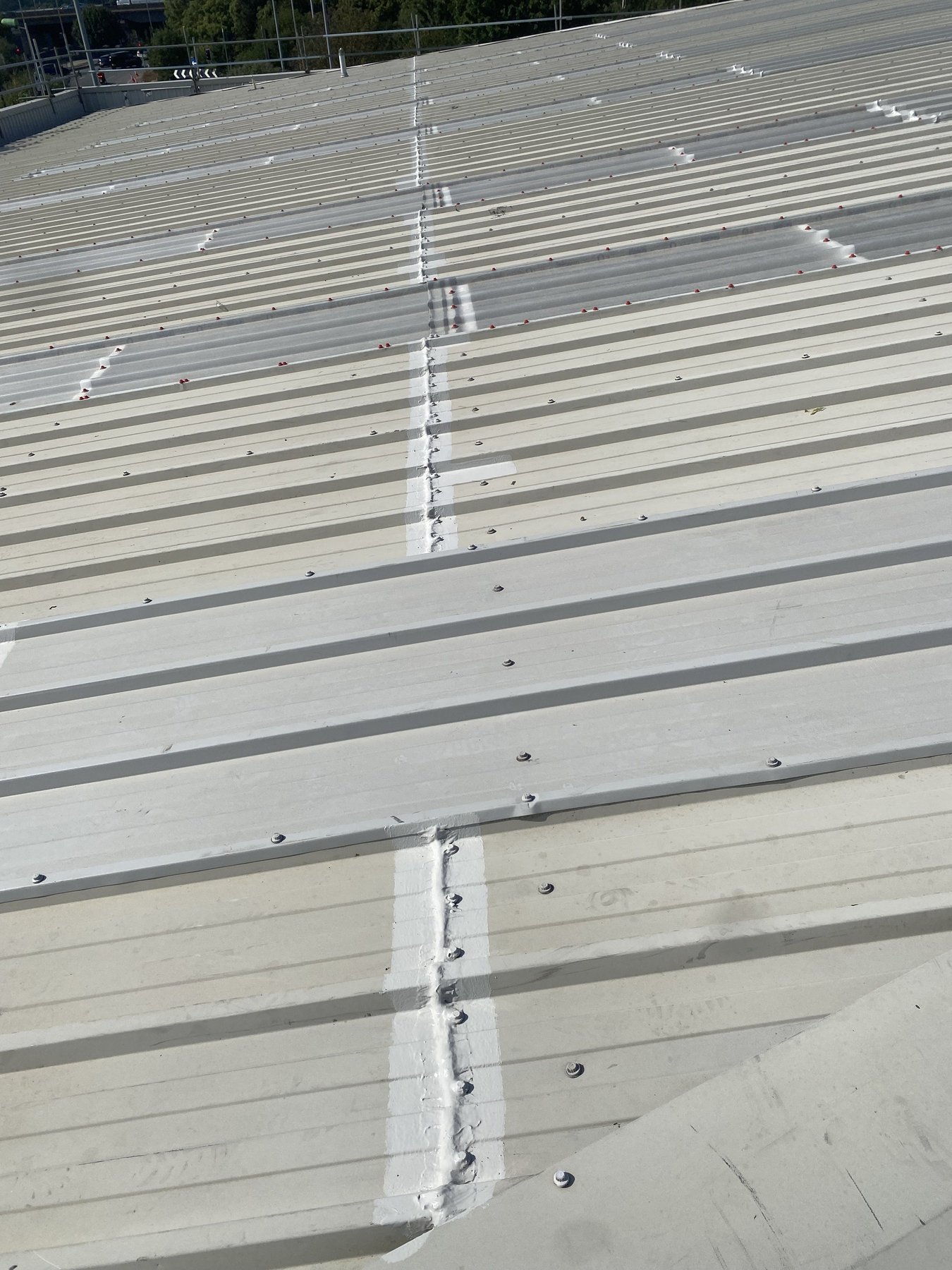
Primer is applied end to end. The joints are then sealed individually, because that is where the original gutter failed, before the liquid coating goes over the whole run and up both upstands. What was a bolted gutter with dozens of joints becomes one continuous surface.
Cold applied, on a live building
The systems we use are cold applied. No torches, no boilers, no hot work permit, and no fire risk over a building full of stock. That matters more than people expect on a distribution unit or a food site, where hot work often means shutting an area down.
Work happens from inside the gutter itself, so the roof either side is left alone and the business underneath carries on. Most runs are done in sections, so if the weather turns we can close down a section watertight rather than leaving the roof open.
Keeping it that way
A repaired gutter still fills with silt and leaf litter, and standing water is what caused the original failure. Most clients put the run on a clearance schedule afterwards, usually twice a year, so it is emptied and flow tested before the next winter rather than after the next leak.
It is considerably cheaper than reacting. It also means somebody is looking at the roof twice a year and can tell you when something else is starting to go.
When lining is the wrong answer
If the gutter sole has perforated over a long stretch, or the supporting structure has corroded, lining a failing substrate just buys a couple of years. We will say so and price the replacement instead.
Same if the gutter is undersized for the roof area and floods in heavy rain. That is a design problem, not a waterproofing one, and no coating fixes it. Sometimes the honest answer is additional outlets rather than a new lining.
Why line rather than replace
-
A fraction of the cost
Lining an existing gutter typically costs far less than stripping and replacing it, with no sheeting or structural work.
-
Nothing comes off the roof
The building stays weathertight throughout. No open roof, no temporary covering, no exposure to a wet week.
-
No hot works
Cold applied systems, so no torch, no permit and no fire risk over a loaded warehouse.
-
Outlets reformed
Outlets and downpipe connections rebuilt and sealed, because that is where most linings fail early.
How a lining job runs
-
Survey and report
We inspect the full run, photograph the joints, outlets and corrosion, and tell you whether coating is viable at all.
-
Clear out and dry
Debris and silt removed, the gutter washed down, then left until it is completely dry. Coating a damp gutter is the most common reason these systems fail.
-
Grind back the joints
Every joint is ground down to remove failed sealant and rust scale, and to give the primer a clean surface to key to.
-
Prime end to end
Primer over the full run, not just the joints, so the coating bonds along the whole length.
-
Seal the joints
Joints sealed individually. This is where the original gutter leaked, so it gets its own step rather than being covered over.
-
Coat and flow test
Liquid coating over the whole run and up both upstands, then flow tested, with a photo record for your maintenance file.
Ready for a price?
Send a few photos and a postcode and we will come back with a fixed written quote, usually within one working day.
Frequently asked questions
Typically twenty years or more for a properly prepared and correctly specified system, and most carry a manufacturer guarantee. Preparation is what decides it, not the product. A coating applied over a damp, dirty or unground gutter will lift within a few winters however good the material is.
Considerably. Replacement means stripping roof sheets either side, working around the structure and leaving the building open to weather. Lining is done in place, usually for a fraction of the cost, and the business underneath keeps trading.
Yes, that is normal. The work happens inside the gutter, so nothing comes off the roof and there is no disruption inside. We agree exclusion zones below the working area and coordinate deliveries with your site team.
The substrate has to be dry and above the system's minimum temperature, so late spring through to early autumn is easiest. Winter work is possible on a settled dry spell, but we would rather book you in properly than rush a job that then fails.
Yes, and they matter more than the straight runs. Blocked, crushed or badly formed outlets cause ponding, and standing water is what kills a gutter. Outlets get reformed and sealed as part of the work, and we flow test before handover.
We tell you. If the sole has perforated over a long stretch or the supporting steel has corroded, lining is patching a failure rather than fixing it. We would rather lose the job than take money for something that leaks again in two winters.
More from this kind of job
Where we work
We are based in Manchester and cover the whole of the North West from here. For roof work and multi-site contracts we travel nationally, and have worked on sites from Bristol to Leicester. If your site is not on the list, ask anyway.
- Manchester
- Liverpool
- Chester
- Warrington
- Preston
- Blackpool
- Lancaster
- Bolton
- Stockport
- Wigan
- Rochdale
- Salford
- Leeds
- Sheffield
Other services you might need
Request a quote
Send us the details and we'll come back with a fixed price. No pressure, no sales calls.